


Image courtesy of National Park Service/Neal Herbert
Think of Arches and Canyonlands national parks and your mind may immediately conjure magnificent vistas, red-rock cliffs, and juniper-speckled plains.
But did you know these protected areas are also rich with life? From bighorn sheep to fairy shrimp, animals have found many ways to survive in southeastern Utah’s stark environment.
With Endangered Species Day on May 20, find inspiration and awe in the diverse array of creatures that call the parks home — and how you can help them thrive for years to come.
Bighorn sheep: master of cliffs
One of the desert’s most iconic dwellers, desert bighorn sheep have long lived among the steep cliffs and rugged slopes of Arches and Canyonlands national parks.
The story of the bighorn sheep also highlights the vital role of national parks in safeguarding the desert’s unique creatures.
Bighorn sheep once likely numbered in the millions in southeastern Utah. They’re commonly etched in the petroglyphs and pictographs left by the Indigenous communities that have inhabited the region since time immemorial.
But these strong, fleet-footed animals faced threats with the arrival of European settlers. Domestic sheep transferred diseases to their desert cousins, which also competed with cattle for forage.
By 1975, Utah’s entire bighorn population had shrunk dramatically to just 1,000 animals.
The impact of the parks
That’s where Canyonlands National Park comes in.
Established in 1964, the young park had a relatively large population of 100 sheep. Recognizing the sheeps’ vulnerability, National Park Service officials quickly phased out the park’s remaining grazing leases.
With the park’s sheep protected, a group of biologists started relocating some of Canyonlands’ bighorn sheep to nearby parks. Among the areas that regained historic sheep populations were Arches National Park and Capitol Reef National Park.
Today, Utah’s sheep population is estimated at 3,000. Arches alone houses about 75 animals. Creative thinking, a strong conservation ethic, and dedicated National Park Service staff together succeeded in re-establishing an iconic desert dweller in its traditional habitat.
The ephemeral fairy shrimp
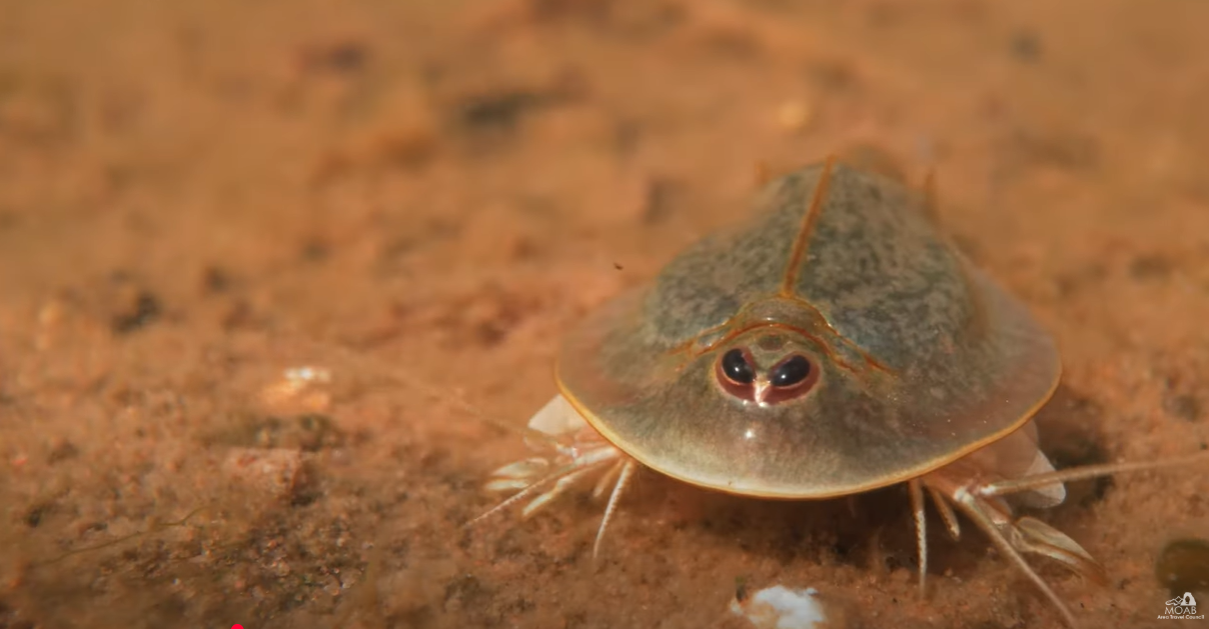
Courtesy of Discover Moab/Mark Finley
While bighorn sheep tend to perch precariously on cliffs, Arches and Canyonlands national parks also harbor some animals best seen from a squat.
Natural potholes eroded out of sandstone fill with rainwater, blossoming into bite-size, ephemeral ecosystems home to insects, bacteria, algae, and — yes — even fairy shrimp.
These extraordinary micro-communities lie dry and dormant until water enters. But then, they spring to life.
“When they’re dry, they’re pretty unremarkable,” said Karen Henker, a ranger at Canyonlands National Park. “…But when a good rain comes to fill [a pothole] up with water, you’ll find a tiny ecosystem filled with a surprising collection of animals.”
As extreme environments, potholes harbor animals that have developed unique adaptations to survive. As pools dry up, the animals must either leave, find a way to lock in their water, or enter an intense hibernation state.
“Organisms stay alive, but you can’t measure that they’re alive because the amounts of heat and gas released are so small,” said scientist Tim Graham. “These organisms can lose up to 92% of the water in their cells and remain alive.”
A legacy of conservation
Today, Arches and Canyonlands are critical places for conserving a diverse array of unique, inspirational wildlife.
But these animals are continually threatened by invasive species, a changing climate, and human impacts. Friends of Arches and Canyonlands is helping the parks safeguard their animal populations for years to come.
For example, FOACP recently partnered with Canyonlands National Park to secure critical water rights within some of the most remote reaches of the park. This work will ensure animals like bighorn sheep retain access to the desert’s most precious resource.
To join FOACP in defending southeastern Utah wildlife, consider setting up a monthly donation. Learn more by following the link below.

